
Rethinking access: a community-led model for sensory therapy in South Africa
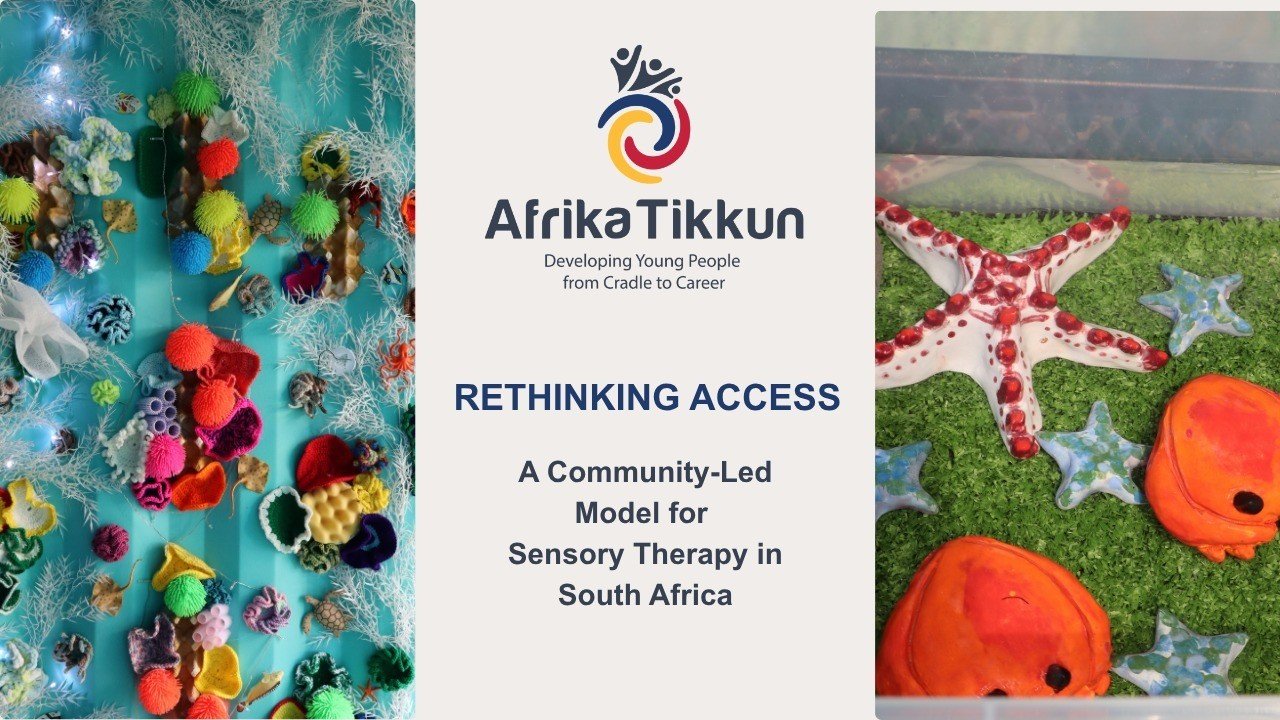
Afrika Tikkun, in partnership with Sensory-Space, has brought a fully equipped sensory therapy space into the heart of Orange Farm. Built from a repurposed shipping container using recycled materials, it expands access to sensory support for children in an underserved community.
Why access to sensory therapy is limited
Access to therapeutic sensory spaces in South Africa is still largely limited to private clinics, specialist centres, and well-resourced schools. For many children in underserved communities, this kind of support remains out of reach.
A sensory therapy space in Orange Farm
A new initiative by Afrika Tikkun, in partnership with Sensory-Space, is challenging that reality by bringing a fully equipped sensory therapy space directly into the heart of Orange Farm. More than just a facility, it represents a shift towards inclusive, community-rooted solutions that expand access to care where it is needed most.
Built with the community
Built from a repurposed shipping container using recycled materials, the facility represents a shift towards models that are accessible, adaptable, and rooted in community ownership. Parents, caregivers, and community members were actively involved in designing and building the space, gaining practical skills to support children beyond the facility itself.
Why sensory integration matters
The need for this kind of innovation is clear. According to the World Health Organization, more than a million children in South Africa are affected by disability, neurodiversity, or mental health challenges, yet access to specialists remains limited.
Sensory integration plays a critical role in how children experience the world, regulate emotions, and engage with learning. For children navigating autism, ADHD, trauma, or anxiety, access to supportive environments can significantly improve wellbeing, focus, and development. These are essential outcomes that should not be reserved for a few.
Dr Dee Blackie, founder of Sensory-Space, emphasises the importance of accessibility in these interventions.
"The space is designed to be an adventure for all participants. It is not just about therapy, it is about curiosity, learning, imagination and testing your sensory abilities. Play is the best way to learn."
A ripple effect for families
What stands out most is the ripple effect beyond the children. Parents are already experiencing the value of the space as a place to reset and manage stress, reinforcing the idea that inclusive design benefits entire communities.
A model designed to scale
This facility is not intended to be a once-off solution. It is a working model for scale, designed to be replicated across schools and communities. It challenges the assumption that high-quality therapeutic environments must come at a high cost.
At its core, this initiative reflects a broader vision of inclusion. One where support is embedded into everyday environments, and where every child can participate fully without barriers.
The question it leaves us with is simple. What would it take to make spaces like this the standard, not the exception?